An honest backhander..
An estimated 60,000 arrests for speech offenses over the past five years.

Which is worse? Which one does more damage? Casual corruption and a little light highway robbery or active and organized malice?
When the police turn on their own people, it can look very different across different nations. In Africa, it goes something like this. You might be pulled over by a policeman hiding behind a bush. He will step out into the road in front of you and just trust that your brakes work. And you can never tell whether you're getting an honest one or whether you'll hear this. Oh dear, you've done something wrong and now I have to take you in. I don't want to, but I have to. I have to take you to the station. And it's an hour's drive in the opposite direction and you're gonna have to spend the night in the cell. I wonder what we can do about that. And it's said with the hand, the nature of the corruption is casual theft.
The UK, by contrast, is different. An estimated 60,000 arrests for speech offenses over the past five years. How about unsolved crimes over that time? Well, the estimate is over two million, but they found the time for that. That is 30 arrests for speech offenses per day. Unsolved crimes per day, 5,852.
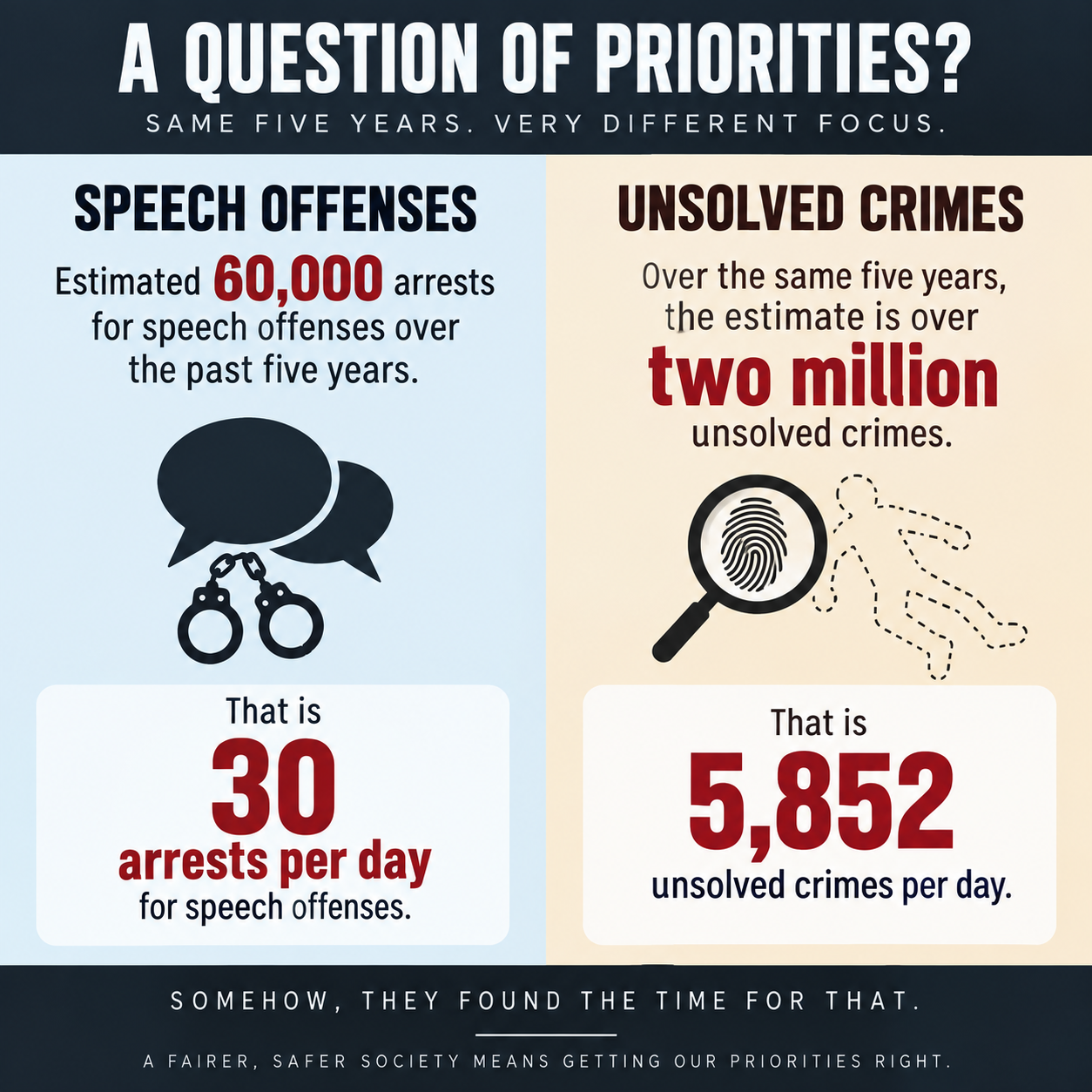
But they found the time for that. It looks and feels different to a lone cop begging a bribe. This is organized, targeted, and intelligent, despite the fact that so many of these cases are later than dismissed as non-crimes. The police arrive at people's doors knowing that the British subject has committed no crime. They arrive en masse and quite often armed, and sometimes they will even do it after midnight. Doesn't it make you wonder where the king went?
I've been watching and tracking how it's eroding in two different places, and it looks different in fascinating ways. South Africa recently had a case of an actual police officer who stole over 1.5 million rand in one day. As I understand it, it went something like this. The police officer pulled a car over for a routine check and discovered that there was a large amount of cash in transit, told the person, "I'm taking you to the police station "because of the suspicious cash in transit. "There's clearly something wrong here," but then kept the money. And it's a very common form of corruption in South Africa, effectively an armed highwayman robbing you at gunpoint, though with a smile.
In the UK though, it's chiefly about preventing people from discussing the number one issue of concern across the UK right now, which is immigration. When did it go wrong for the UK? It used to work like this. The police force used to report in to the monarch, to the king or to the queen. Some decades ago, they made a change there so that the police now report him to the government. They are no longer His Majesty's police force. They are answerable to the government, and that has changed the control and the incentives. They are no longer there to protect His Majesty's subjects so much as to do the will of a government.
It's a subtle shift with a massive consequence. To repair this, the first thing you do is you put it back under the control of the monarch. Question, is it good or bad to have a monarch in a country? Well, the answer is, is the monarch good or bad? The one great upside in the UK is that there is something above government, and it's supposed to work like this. Your defender of the faith, your monarch, is supposed to be personally accountable to God, and the monarch then makes sure that their government beneath them is taking care of their subjects. That is meant to be King Charles' role. And when the monarch starts to perceive that a government is mistreating or oppressing his subjects, he can dissolve that government. He's not supposed to get involved in politics, but he can dissolve a government that is ineffective.
Now, for some reason, he hasn't noticed this record 60,000 arrests among a group of people who are supposed to have free speech. In around the 1950s, the UK police was considered one of the finest institutions on the planet with levels of trust that were unparalleled. If you go and take a look at the articles today, you find nothing but decline in the percentage of people who trust the police.
Some Brits are now saying that they trust the media more than they trust the police. That's about as bad as you can get. Now, back to South Africa. Here's another common one, dockets that go missing. And yes, you're understanding that correctly. The criminal or gang or consortium has been caught. There's a trial coming up, but not if the docket mysteriously disappears, and who is perfectly positioned to accomplish that? If the docket goes away, then everything starts again. It's like a great reset for a paying criminal.
It is economically viable to bribe a cop. And they do it because it works. So on the one hand, you have the casual interpersonal corruption of a very friendly person with a gun who pulls you over and demands a bribe. A bribe can be as small as a Coca-Cola, or it can be 1.5 million rand's worth of cash in transit. On the other hand, you have a group of people who used to protect the subjects of a monarch, but have now fallen under the control of a government and carry out their ideology, going in armed groups to arrest single individuals, mams, dads, grandparents, older people, younger people, after midnight as an intimidation tactic in order to ensure that they don't speak about a taboo topic.
In Britain, they look different, but they're both equally capable of destroying a nation.
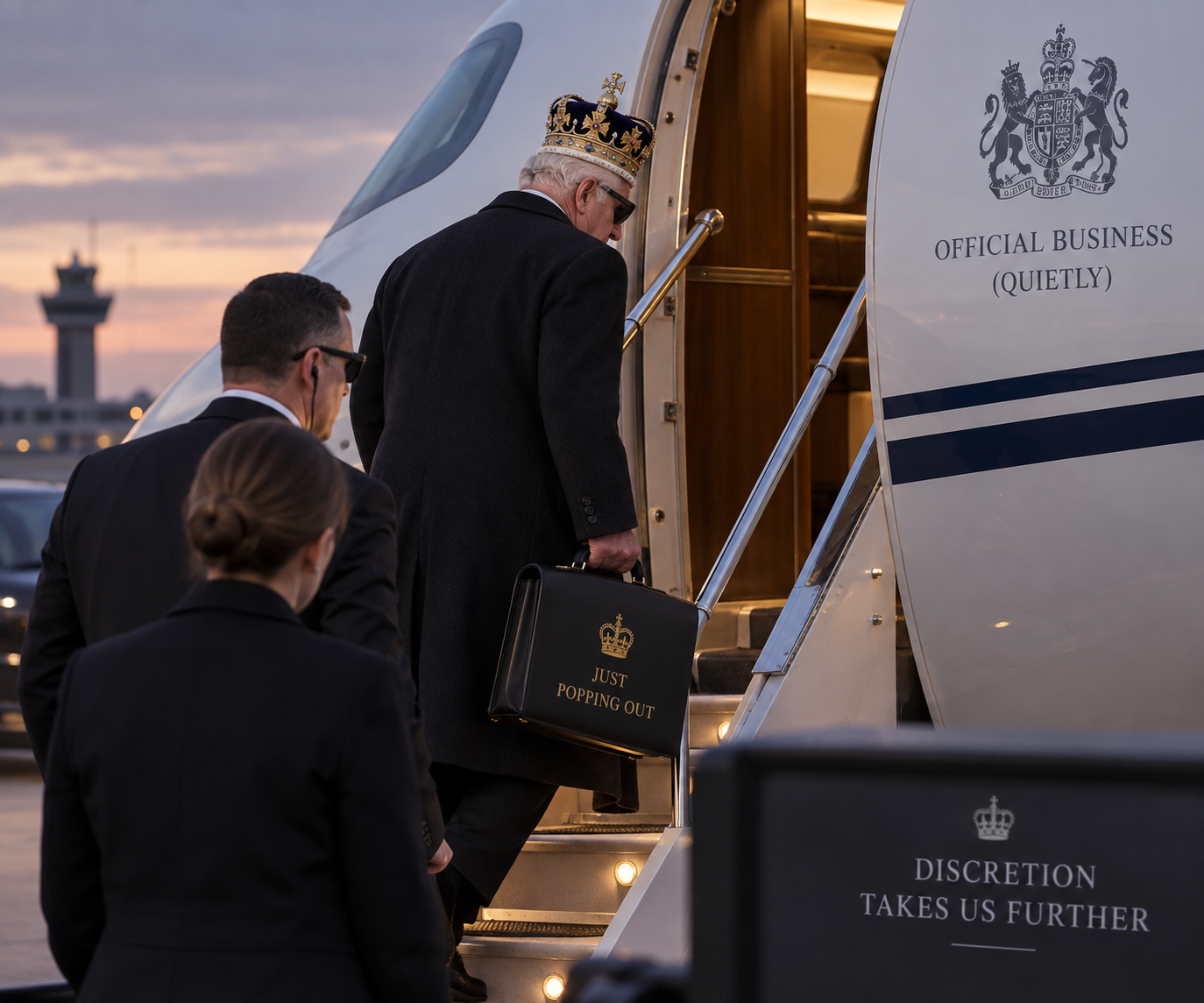
Where is the king? And why do we ever have to have conversations like this? And which do you think is worse?
Douglas Kruger.


